
Symptom
Data exists, but it is scattered, poorly structured or hard to connect.
The system first needs usable data, processes, architecture, governance and access.
Data exists, but it is scattered, poorly structured or hard to connect.
Mapping, prioritization, progressive modernization and preparation of first sensors.
A foundation that can move toward AI graft or AI integration.
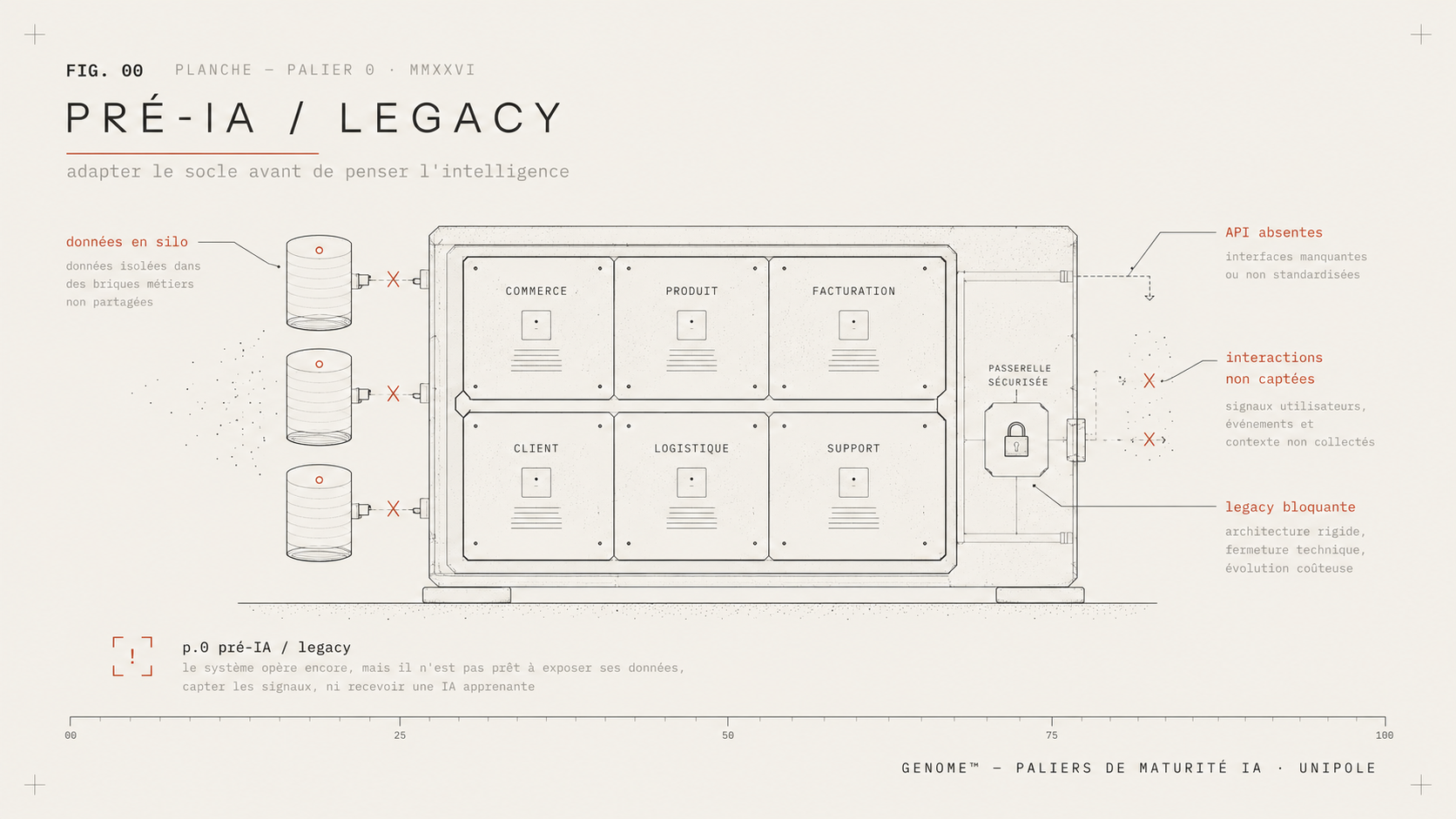
This level covers systems that are not yet ready to receive AI safely. Architecture, data, processes or technical debt form a prerequisite barrier: poorly structured data, unreliable APIs, silos, obsolete interfaces and weak governance.
The priority is not to graft or integrate AI yet, but to make the system AI-compatible.
Modernize the foundation, expose useful data, structure flows, instrument usage and remove legacy blockers.
A Level 0 system must first regain the ability to evolve before entering the GENOME™ path.